 As for integrity, it's not as compelling or as highly viewed as other traits. It's easy to be successful without integrity, right? Sometimes, integrity even seems like a liability! It can slow us down and hold us up. What we will discover in our study is that, without integrity, we cannot withstand the test of time. We won't have resilience. We won't be able to make it through tests and trials without spoiling our soul.
The root word of "integrity" is the Latin word "integer" which means "whole" or "complete". The mathematical application of the word is a number that is not expressed as a fraction or as a decimal. It is a whole number. Integers form the foundation and the baseline for all other mathematical thought. They connect with all other functions. Therefore, integrity can be associated with the concept of connectivity; the need to connect or to "integrate". Think about the importance of integrity on a ship or on a plane. What if either lacked integrity!?! "You might as well go ahead and send your last text message" because when these vessels, which hold and connect everyone on board, lose integrity, they lose their ability to protect you. The integrity of the engines, the hulls, the steering, the controls and the communication are all of vital importance.
So, we can see the need for integrity is virtually all around us. In fact, we trust that most places have maintained their necessary level of integrity. When they do not, we hear about them, such as the fertilizer plant in Texas which experienced a chemical compromise and the plant exploded with such intensity, it could be felt 50 miles away. Thirty five people died when integrity gave way. Two brothers decided that, because of their lack of integrity and their distrust of the integrity of others, they would place bombs at the finish line of the Boston Marathon. Hundreds were injured. We know about the lost integrity of the ground beneath an entire community in China. When the ground finally gave way, a landslide decimated the town and killed thousands of people. We know how important it is to maintain integrity.
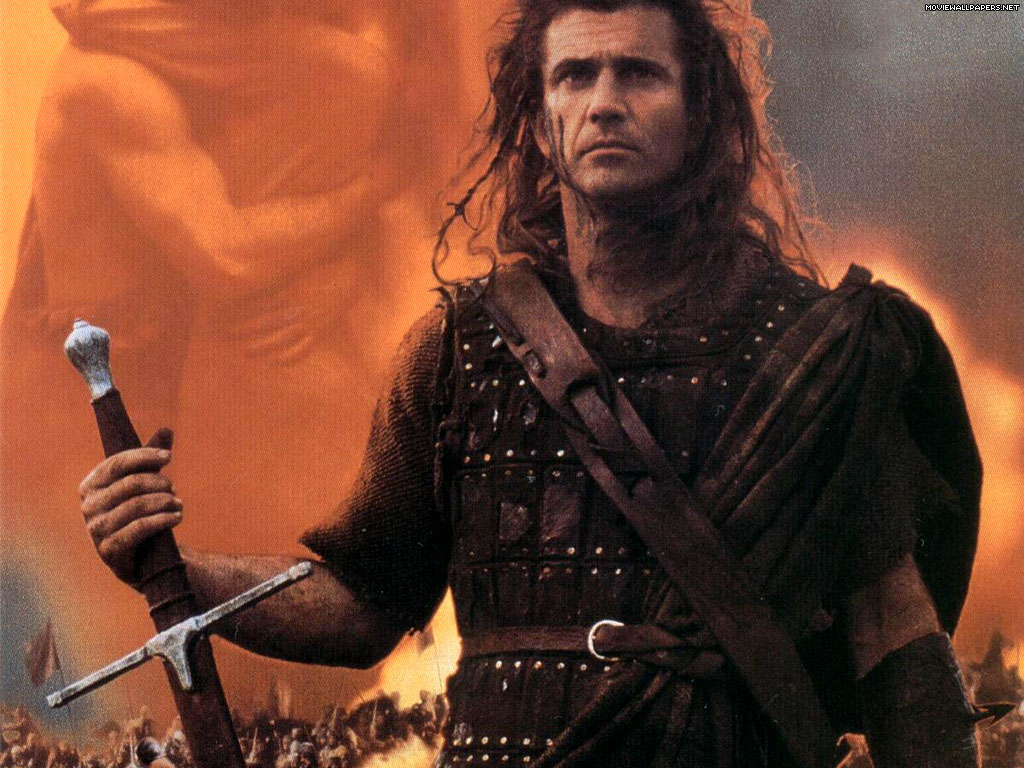 One individual who walked the journey and held integrity was David; King David from the Bible. David was our Maximus. He was the William Wallace of Braveheart. "David was Peter Parker, Bruce Wayne and Clark Kent all wrapped up in one". Yet David was an incredibly flawed person. He stole another man's wife and sent that man to his death in battle. But integrity is not about being faultless; it is about being "falseless". It is not about attaining perfection; it's about discovering intention. Lets go back in the life of David, back when he was a teenager. David had the job of looking after sheep, which was not the job for future kings. His brothers were far more noble in their careers as soldiers.
 We read in the bible that, one day, the army in which his brothers served was faced with battling the Philistines. These two armies decided to have their best warriors fight to determine victory. But the Philistines had a secret weapon named Goliath. David showed up on the battlefield delivering cheese and he heard the taunting of Goliath. David was shocked and asked "Is there no one to step up against him?" Showing great selflessness, David said "I'll take care of it!" This was condescending, naive and insulting to the soldiers. His own brothers dismissed him, but David was confident. He tells the king that he is qualified to fight Goliath. He talks about how he went after lions and bears who had taken his sheep. He killed the wild beasts and declares that Goliath will end up the same way. He says the Lord who delivered him from danger in the lonely field would also hand him victory over Goliath. This was an amazing sell because David's resume that he presents is one he built when no one was looking!! In what was probably and unbelievable response, Saul tells David to "Go, and may the Lord be with you". We all know what happened next. But see, David let's us know in this passage that, what we do in secret forms our character.
 1 Samuel 16, right before the passages about Goliath, we read about the prophet Samuel going to the house of Jesse looking for the the future king. Jesse's hearty sons parade in front of Samuel, one by one, but none of them are chosen by the Lord. Samuel himself thought a number of times that he was looking at the future king because of their physique, but each time the Lord whispered "No". This reminds Erwin of the times when he was young and when he got picked last on the football team. Sometimes, when we see someone tall and good-looking, there can be this form of judgement. But the Lord doesn't look at the things people look at. Rather, the Lord looks at the heart. Samuel turned down each sons in succession and finally asked a question he shouldn't have had to ask!! "Are these all the sons you have?" What kind of father would leave out one of his sons!?! Most dads would bring ALL their sons, right? It is almost as if Jesse assumed David could not possibly be the one to be chosen. When Samuel learns of the other son, he tells no one to sit down until David arrives. Finally, David comes and he is described as being healthy and vibrant. This story of David describes integrity as a key virtue of those whom God chooses to do His work. It is integrity of the heart.
 In Psalms 78:70-72, we read, He chose David his servant and took him from the sheep pens; 71 from tending the sheep he brought him to be the shepherd of his people Jacob, of Israel his inheritance. 72
And David shepherded them with integrity of heart; with skillful hands he led them.
Proverbs 28:3 says "Do not drag me away with the wicked, with those who do evil, who speak cordially with their neighbors but harbor malice in their hearts."
When you pursue the virtue of integrity, you'll find the unexpected virtue of courage and you'll find that nothing can take it either away. Your integrity becomes your armor. Everything God creates was meant to be integrated. The entire universe is integrated. When you think about things like aerosols destroying the ozone, we realize that we as humans are actually affecting everything around us. But this only matters if life matters. If life doesn't matter, lets just destroy everything! Something inside us knows we are supposed to protect the innocent and unprotected species. We know we are supposed to protect doves and beetles, oceans and atmospheres. Have you ever noticed that everything else around seems to have more integrity than humans. A baboon has more integrity because it is true to itself. Whatever it does is the true nature of a a baboon! Gravity is consistently gravity. It is mathematically a feature of integrity. There is not a single antelope who wakes up and decides it never wants to an antelope again. If an antelope decided it wanted to be the hunter one day, then it would be a very short-lived dream.
One day, Erwin went grocery shopping with his wife, Kim. While she shopped for the household, he wandered to gather his own. Eight bags of popcorn and two cases of diet root beer later, he found himself in the produce section. "Did you know there is a section in Pavillion (the grocery store) that is filled with fruits and vegetables!! I know! It is amazing!". While mulling around the fruit section, Erwin gathered some bananas and started thinking... When you buy a banana, you are technically just buying banana peels, right? If the universe had no integrity, there might not be a banana in the peels. We buy peels knowing there is a high probability that a banana is inside, but we don't know 100%. There is an element of "faith" the banana even exists. We assume it's not a cantaloupe. Most of us have never even thought about whether or not there is a banana inside because we have such "faith". Have you ever gone to the store and bought a watermelon. You might have only bought a watermelon rine, but you had faith that there was watermelon inside. We might thump the watermelon to determine the ripeness, but regardless, we assume it's watermelon. Why? Because everything God creates has integrity! BUT there is this squirrely species called humans. While humans might be consistently inconsistent, often integrity comes into question. This is because God gave us free will.
We were created to be in relationship with God and others. God gave us guiding principles consistent with creation, a creation He created with love. If our hearts are out of alignment with Him, our hearts are out of alignment with others. When Jesus was asked what the most important commands God gave us were, He said, "Love the Lord your God with all your heart, with all your soul and with all your mind...(and) Love your neighbor as yourself".
Have you ever felt that you were not the same person everywhere? You might think you're a different person at church, a different person at home and a different person at work. Because of this, you then feel like you are not in harmony, you're disconnected and not integrated. For instance, have you ever been around people who bring out the worst in you and you didn't like it? See, when we become unintegrated, it is because of something internal in us. We might say, "I am really a kind person, but not when there is pressure. We might "Always tell the truth", but only when the truth works to our advantage. We might maintain healthy relationships, but only as long as the relationships serve us. Like bananas, we have layers within us. We might like our outer layer; our looks, our health, our physique, our status, our success, our home. But we might not like our second layer; our consistently living by the truths of Christ. See, when the pressure cookers of life come, which are called relationships, employment, finances etc and we start attributing our behavior to what's going on around us, it is reflective of our integrity; our ability to maintain ourselves in who God meant for us to be. There are no such things as white lies. We choose to lie or to not lie. We might be patient until what we want doesn't happen. Our third layer, the core of who we are, can often be affected by the outer layers. Our fruit can be refreshing and nourishing to us and others. On the other hand, it can become bitter, violent and deceptive. We can deliberately choose the quality of our hearts by choosing to live as God tells us to.
Often, religion can cause us to create an external shell. We might be afraid to be transparent, because it can sometimes expose imperfections. But Jesus came to change us and to give us integrity of the heart and change us from the inside out. God wants to give us a new heart. He wants to make in us a new creation. There was a death on the cross which was meant to realign us with our God in order to cement our own personal integrity.


 Posts
Posts


